
Fortress Merge: Puzzle Defense
TapNationStrategy
4.31.64K Reviews
- Version
- 0.8.1
- Installs
- 1.00M
- Age Rating
- Everyone 10+
Screenshots
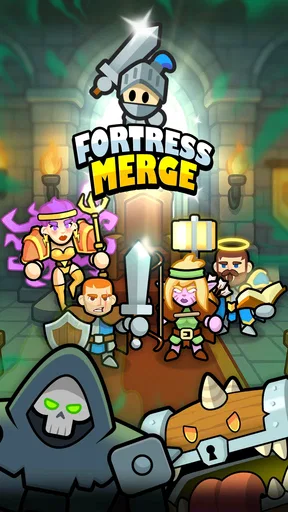
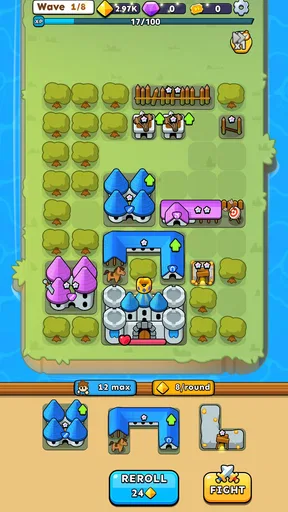
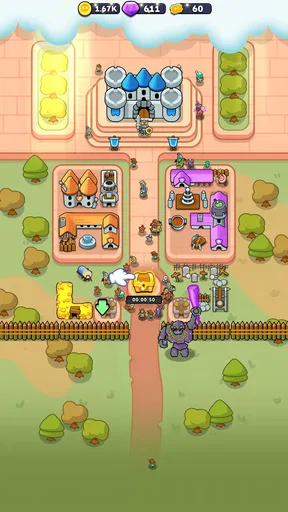

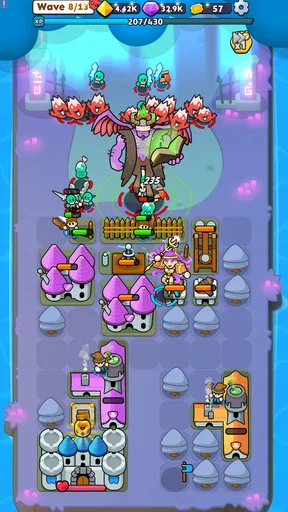
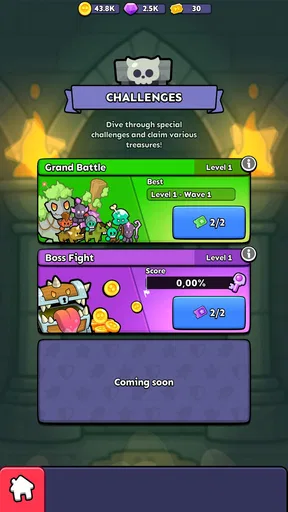
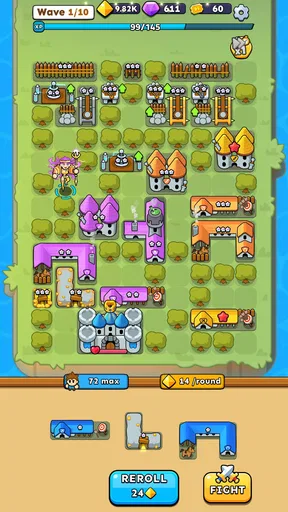
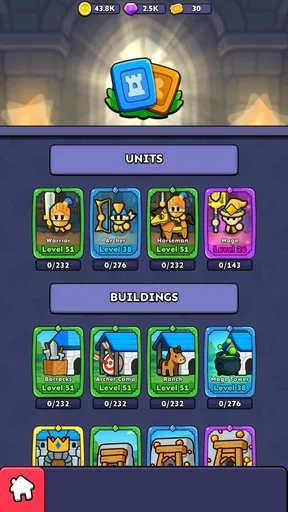
Our Review of Fortress Merge: Puzzle Defense
 Analysis by Appyee
Fortress Merge: Puzzle Defense is the kind of strategy game I can open for a few minutes without needing to relearn a complicated control system. Its central idea is easy to understand: combine pieces, improve your defensive position, and try to survive incoming enemy waves. That simple loop makes it approachable, but the decisions become more interesting once I stop treating every merge as an automatic upgrade.
Developed by TapNation, the game is free to download and sits in the strategy category. It is aimed at Everyone 10+, which feels appropriate for a light tactical game built around puzzle decisions rather than realistic combat. The current version is 0.8.1, and the game has already passed over a million installs, with a 4.3 average from around 56 thousand ratings. Those figures suggest that it has found a sizeable audience, but they do not change the main question: is its particular blend of merging and defense a good fit for the way you like to play?
What to expect when you begin
The first thing I noticed is that Fortress Merge is less about long planning sessions and more about making useful decisions under pressure. You are not simply arranging a peaceful collection of matching objects. The purpose of improving your board is to prepare for enemy waves, so every combination has a practical consequence. A stronger position can give you breathing room, while a careless merge can leave a weak area exactly when you need it most.
That gives the game a different rhythm from a conventional match puzzle. In a typical matching game, clearing pieces may be the main reward. Here, the merge is valuable because it supports defense. I found myself asking whether I should combine immediately for a visible improvement or hold pieces back so I could respond to the next threat. That small delay between seeing a possible merge and committing to it is where much of the strategy lives.
The game also feels more accessible than a large, menu-heavy strategy title. You do not need to learn a broad economy, memorize a technology tree, or manage a long list of resources before making your first meaningful move. That makes it a sensible choice for someone who likes tactical thinking but does not want a second job on a phone screen.
At the same time, players expecting a deep city-building simulation should adjust their expectations. The city theme gives the defense loop a clear setting, but this is primarily a compact puzzle strategy experience. I would choose it for short decisions and repeated attempts, not for elaborate diplomacy, detailed construction planning, or the broad freedom found in larger strategy games.
The right mindset for the opening minutes
My best advice for a first session is to avoid merging simply because two compatible pieces are available. Before touching them, look at the whole defensive layout and identify the area most likely to suffer during the next wave. A merge that improves a central position may be less valuable than one that strengthens an exposed side, even if the central upgrade looks more impressive.
This is one of the first non-obvious lessons in the game: the strongest-looking merge is not always the most useful defensive merge. The value of an upgrade depends on timing and placement. If a wave is about to test a weak lane, improving somewhere else can leave you with a better board on paper but a worse chance of surviving.
I also recommend treating the first few rounds as a learning space rather than trying to play perfectly. Notice which parts of the board are repeatedly pressured, how quickly your position improves after a combination, and whether saving pieces gives you more flexibility. That information is more useful than rushing through the opening just to see the next screen.
Setting up a first run without overthinking it
Getting started is straightforward because the game is free and supports devices running Android 7.1 or later. On a compatible phone, the sensible approach is simply to install it, launch the opening sequence, and pay attention to the first explanation of merging and defense. I would not begin by exploring every available option. The useful setup work is understanding the board and the relationship between an upgrade and an incoming wave.
The age rating of Everyone 10+ also gives families a general indication of the intended audience, although parents should still remember that the game includes in-app purchases. Individual purchases range from $0.99 to $109.99, so I would check the device’s purchase controls before handing the phone to a child. The free entry point is convenient, but the presence of optional spending means it is worth making that boundary clear from the start.
For a first-time player, the most important setup choice is not a visual preference or a long-term build. It is deciding how much attention you can give the session. If you are opening the game while distracted, play conservatively and focus on learning the merge relationship. If you have a few uninterrupted minutes, use the opening run to observe the board before each action. The game rewards attention more than frantic tapping.
One practical routine worked well for me: I paused briefly after each successful combination, checked the weakest part of the city, and only then looked for the next merge. This prevented the common mistake of chaining moves automatically. It also made the game feel more strategic, because I was responding to the state of the defense rather than following a fixed sequence.
How to reach the first meaningful success
Your first meaningful success is not merely creating a larger piece. It is completing a defensive sequence while keeping enough flexibility to handle what comes next. To get there, start by scanning for safe combinations, then compare them with the immediate danger. If a merge directly improves the area under pressure, it is usually a strong opening action. If there is no urgent threat, holding a possible pair can be sensible.
The second useful habit is to avoid filling your attention with only the next move. After a combination, look at what the board has become. A merge may open a better arrangement, but it may also remove the only convenient option in a particular area. Thinking one action beyond the current merge helps prevent a short-term gain from creating a poor follow-up.
When the first wave arrives, resist the temptation to panic and combine everything available. Instead, decide whether the board needs immediate strength or future flexibility. Immediate strength is the right answer when a weak section is about to be tested. Flexibility matters when the defense is stable and you can preserve several possible responses.
This creates a useful trade-off that is easy to miss in the tutorial-style opening: merging quickly improves the present board, while waiting can protect your choices for the next threat. Neither approach is always correct. The better option changes with the wave and the position of your pieces, which is why repeating the same opening pattern eventually becomes less effective.
If your first attempt ends badly, I would not interpret that as a sign that the game is unfair or too complex. Early failures are useful because they show which decisions were made without enough attention. On the next run, change one habit rather than everything at once. For example, keep one possible merge in reserve and see whether that gives you more control when the wave changes.
Where new players commonly get confused
The biggest source of confusion is the difference between a merge that looks productive and a merge that actually supports survival. The visual satisfaction of combining pieces can make every available pair feel urgent. It is not. The board is a defensive puzzle, so location and timing matter at least as much as the act of combining.
Another confusing point is the role of the city itself. It is tempting to think of the setting as a traditional city builder where progress comes mainly from expanding and decorating. My experience is that the city works more as the stage for the defensive decisions. The meaningful question is not “what can I build next?” in isolation, but “which improvement gives me the best chance against the next enemy pressure?”
Players may also wonder why a seemingly strong position can still collapse. One reason is that a board can be upgraded unevenly. A powerful area does not compensate for every weak area if the next wave reaches the neglected side. I found it more reliable to maintain a reasonably balanced defense than to concentrate all improvements in the most obvious location.
There is also a temptation to judge progress only by the highest level reached in a single run. That can hide a more useful form of improvement. If you learn to recognize dangerous layouts earlier, preserve a better reserve, or make fewer automatic merges, you are becoming better even before the result screen shows a dramatic change.
For anyone asking whether the game requires constant concentration, I would describe it as moderate rather than exhausting. The individual controls are simple, but the timing of decisions deserves attention. It works well when you want a focused break, yet it is not ideal if you are looking for something that can be played entirely in the background while doing something else.
Handling purchases and the free starting point
The free price makes it easy to try the core experience before deciding whether it belongs on your phone. That is a genuine advantage over strategy games that ask for payment before you can understand their loop. Still, I would approach the in-app purchase range carefully. The lower-cost options may feel easy to justify in isolation, while the highest listed item is substantial enough that families should use purchase restrictions rather than relying on memory.
I would also avoid spending simply because a difficult wave made the previous attempt frustrating. A defensive puzzle is most satisfying when the solution comes from understanding the board. If you are considering a purchase, first ask whether it changes the way you enjoy the game or merely skips a moment that you could learn from. That distinction matters more here than the presence of optional spending itself.
For a child using a shared device, an adult should handle the purchase settings before the first session. For an adult player, the free entry point is enough to decide whether the merge-and-defense loop feels rewarding. I would give the game several short sessions rather than one long trial, because its strengths become clearer once you start noticing patterns in your own decisions.
How it compares with familiar strategy alternatives
Compared with a traditional tower-defense game, Fortress Merge puts more emphasis on preparation through combinations and less on manually placing a large collection of defensive structures. If you enjoy choosing exact tower positions, adjusting attack priorities, and controlling a battlefield in detail, a conventional tower-defense title may offer more depth. This game is better suited to players who want those defensive questions compressed into a puzzle board.
Compared with a standard merge game, the enemy waves give each combination a clearer purpose. You are not only collecting higher-level pieces or chasing a satisfying chain. Your choices are tied to survival, which gives the merge action more tension. The trade-off is that players who prefer a calm, decoration-focused merge experience may find the defensive pressure less relaxing.
It also differs from large-scale mobile strategy games that revolve around timers, alliances, extensive upgrades, or long-term territory control. Fortress Merge is easier to approach and quicker to understand, but it does not aim to replace those broader systems. I would recommend it to someone who wants a compact strategy loop rather than a persistent empire that demands regular check-ins.
The best alternative depends on what you want from your phone. Choose a conventional tower-defense game if detailed placement is the main pleasure. Choose a slower merge title if you want a gentler pace. Choose a larger strategy game if you enjoy planning across many systems. Pick this one when you want the satisfying clarity of merging combined with the pressure of defending a vulnerable position.
A realistic everyday session
Imagine that I have ten minutes before leaving home. I open the game, make a quick scan of the board, and identify one exposed section rather than trying to improve everything. I make a targeted merge, watch how the position changes, and keep a second option available instead of immediately combining every pair. When the wave arrives, I can respond with a plan rather than tapping at random.
That scenario captures the game’s strongest use case. It is easy to enter, the objective is understandable, and a short session can still contain a real decision. The limitation is that the same simplicity may feel repetitive if you want a long narrative, a large social layer, or a campaign with many different strategic systems. I would use it as a focused break, not as my only strategy game.
Who should play and who should skip it
I think Fortress Merge is a good fit for first-time strategy players, fans of merge puzzles who want more tension, and anyone who likes making small tactical choices without learning a complicated interface. The free starting price lowers the risk of trying it, while the Everyone 10+ rating makes its intended tone clear. Players who enjoy improving through repeated attempts should find the loop approachable.
I would be more cautious recommending it to someone who dislikes wave-based pressure or who wants complete control over every defensive unit. The game’s appeal comes from working within the puzzle structure, not from commanding a large battlefield directly. It may also disappoint players who expect a fully developed city simulator, because the city theme supports the defense rather than replacing it with an expansive building sandbox.
It is worth remembering that the game is still relatively early in its version history, with the release dated March 21, 2025. That makes the current experience best judged on its present merge-and-defense loop rather than on assumptions about where it might go. I prefer evaluating what is enjoyable now: the readable opening, the useful tension between saving and combining, and the need to pay attention to weak areas.
My recommendation after learning the loop
After spending time with it, I see Fortress Merge: Puzzle Defense as a friendly entry point into mobile strategy rather than a replacement for every other game in the genre. Its strongest idea is the connection between a simple merge and a concrete defensive consequence. That connection gives ordinary-looking puzzle moves a reason to matter.
The path to a first success is reassuring once you understand three habits: inspect the whole board before merging, strengthen the area that is actually at risk, and keep some flexibility instead of spending every option immediately. Those habits make the opening less confusing and remain useful as the challenges become less forgiving.
My recommendation is to try it if you want a free, compact strategy game that can fit into short sessions and still ask you to think. I would skip it if your priority is deep construction, precise tower placement, or a large persistent world. For everyone in between, it is worth installing with sensible purchase controls and giving the merge decisions a fair chance. The game is at its best when you treat every combination as a defensive choice, not just a bigger number.
Verdict
Strengths of Fortress Merge: Puzzle Defense
- Easy-to-learn merge mechanics make the game approachable for casual players.
- Short battles fit well into quick gaming sessions.
- Combining towers creates satisfying moments of strategic progression.
- Bright visuals and clear menus make gameplay easy to follow.
- Regular rewards encourage players to return and keep upgrading defenses.
Limitations of Fortress Merge: Puzzle Defense
- Difficulty can increase sharply after the early stages.
- Energy or waiting systems may limit extended play sessions.
- Randomized merges can make some victories depend on luck.
- Upgrade costs may become demanding as tower levels rise.
- Ads or optional purchases can affect the pace of progression.
Other Releases by TapNation
View All
Thief Puzzle: to pass a level
Puzzle4.6

Guess Their Answer - IQ Games
Trivia4.4

Parking Jam: Car Parking Games
Strategy4.4

Hoop World: Flip Dunk Game 3D
Sports4.7
Similar Picks in This Category
View All
Clash of Clans
Supercell4.5

Plants vs. Zombies™
ELECTRONIC ARTS3.7

Lords Mobile: Kingdom Wars
IGG.COM4.5

Clash Royale
Supercell4.4

State.io — Conquer the World
CASUAL AZUR GAMES4.1

Car Driving School : Car Games
Spark Game Studios3.9
Frequently Asked Questions
What is Fortress Merge: Puzzle Defense?
Fortress Merge: Puzzle Defense is a strategy puzzle game that combines tile or item merging with tower-defense mechanics. You merge matching pieces to create stronger units, place or upgrade defenses, and survive waves of enemies attacking your fortress. Its gameplay is designed for short sessions, but later stages require careful planning, efficient resource management, and attention to enemy patterns.
How does the gameplay work in Fortress Merge: Puzzle Defense?
The main gameplay loop usually involves combining identical objects to produce more powerful defenses, then using those defenses to stop incoming enemies. Positioning is important because stronger units are not always useful if placed in the wrong lane or at the wrong time. Before downloading, expect a mixture of relaxing puzzle decisions and increasingly demanding strategic challenges as stages become more complex.
Is Fortress Merge: Puzzle Defense free to download and play?
Fortress Merge: Puzzle Defense can generally be downloaded without an upfront purchase, although the exact availability and pricing may depend on whether you use Android or iOS. Like many free-to-play mobile games, it may include optional purchases for currency, boosts, extra attempts, or faster progression. Check the store listing carefully for in-app purchases and any age or regional restrictions.
Does Fortress Merge: Puzzle Defense require an internet connection?
Some parts of Fortress Merge: Puzzle Defense may work without a constant connection, particularly basic puzzle or campaign gameplay, but online access can be required for advertisements, cloud saving, events, updates, rewards, or purchases. The exact offline functionality may vary between versions. If you plan to play while traveling, test the game after installation before relying on it without mobile data or Wi-Fi.
Is Fortress Merge: Puzzle Defense suitable for casual players and children?
The game is suitable for players who enjoy simple controls, colorful puzzle mechanics, and light strategic planning. However, parents should review the store rating, advertising behavior, privacy information, and in-app purchase settings before allowing younger children to play. Difficulty can increase over time, and optional purchases or timed rewards may encourage longer sessions, so parental controls are recommended.
Play our best games!


